

Bringing home a new puppy is pure joy: the tiny paws, the sleepy cuddles, the endless playfulness. It also comes with one very real challenge that every new owner faces: potty training your puppy.
The good news is that house training a puppy is completely achievable with the right plan. It doesn’t require harsh methods, expensive gadgets, or a perfect temperament. It requires three things: consistency, patience, and positive reinforcement.
In this ultimate guide, you’ll learn exactly how to potty train a puppy, from setting up a schedule and choosing a potty spot to crate training, handling accidents, and troubleshooting common problems. Whether you’ve just welcomed an eight-week-old pup or you’re struggling with a stubborn older puppy, this step-by-step guide will help you get your home (and your sanity) back.
In this guide:
- How long potty training takes
- What you need before you start
- A step-by-step potty training method
- How to use crate training
- What to do about accidents
- Common mistakes to avoid
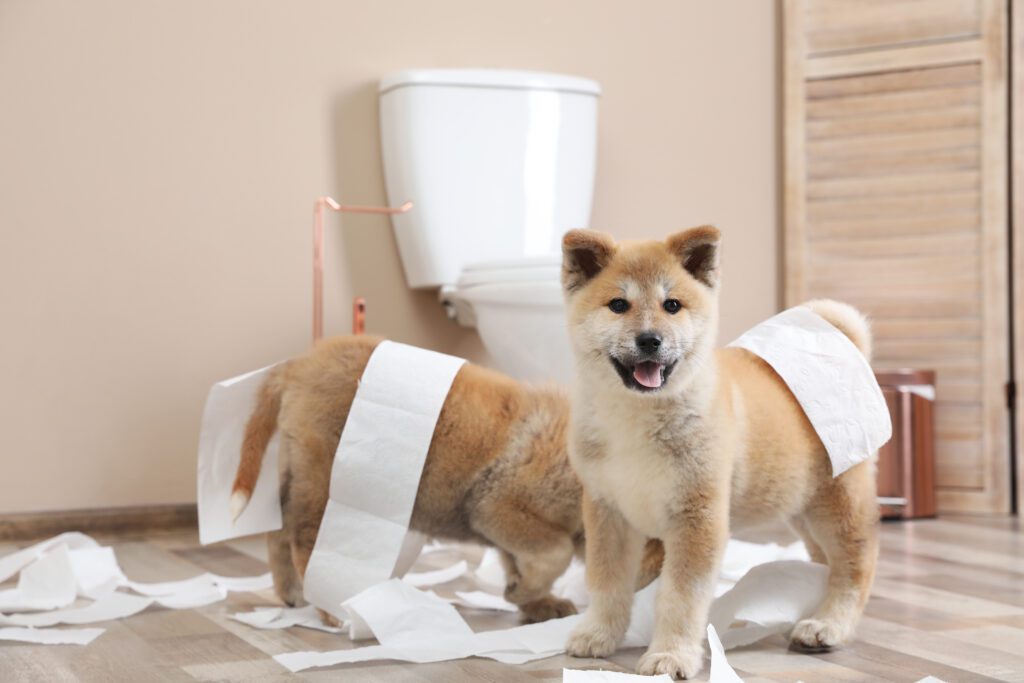
How Long Does It Take to Potty Train a Puppy?
This is the question every new puppy owner asks, and the honest answer is: it depends.
Most puppies can be reliably house trained in about four to six months, though some take up to a year. Several factors influence the timeline:
- Age: Puppies under 12 weeks have very little bladder control. Most owners start training between 8 and 12 weeks old.
- Breed and size: Small breeds have smaller bladders and faster metabolisms, so they often need more frequent trips outside and may take longer to master.
- Consistency: The more consistent your routine, the faster your puppy learns.
- Previous environment: A puppy who was kept in a dirty or cramped space before coming home may need extra time to learn that going indoors isn’t okay.
- Individual personality: Just like children, some puppies simply learn faster than others.
Don’t compare your puppy to someone else’s. Progress is rarely a straight line, and the occasional accident is a normal part of the process.
What You Need Before You Start
A little preparation makes puppy potty training far smoother. Gather these essentials before (or right after) your puppy comes home:
A Crate or Playpen
Used correctly, a crate is one of the most effective house training tools available (more on that below).
A Leash & Collar or Harness
Even in a fenced yard, going out on a leash helps keep your puppy focused on the task.
High-Value Treats
Small, soft, smelly treats work best. Your puppy should find them far more exciting than regular kibble.
An Enzymatic Cleaner
Regular household cleaners don’t fully remove odor, and lingering smells can draw your puppy back to the same spot.
Poop Bags
For quick cleanup and trips outside the home.
A Potty Log or Notes App
Tracking when your puppy eats, drinks, and goes helps you spot patterns quickly.
Optional
Puppy pads or a grass patch if you live in an apartment or can’t get outside quickly.
Step-by-Step: How to Potty Train a Puppy
Pick one consistent spot outside, whether that’s a corner of the yard or a specific patch near your building, and take your puppy to it every single time. The familiar scent helps remind them why they’re there.
Always carry or walk your puppy to the same spot on a leash. Stay calm and quiet and let them sniff around. Too much play or chatter at this stage can distract them from the job at hand.
Young puppies have tiny bladders. A common rule of thumb is that a puppy can hold their bladder for roughly one hour for every month of age, plus one, with an upper limit of around eight hours for adult dogs. In practice, that means an eight-week-old puppy may need to go out every one to two hours.
Take your puppy out immediately after:
- Waking up from a nap or overnight sleep
- Eating or drinking
- Playing or an exciting burst of activity
- Chewing a bone or toy for a long time
- Spending time in the crate
And be proactive. Don’t wait for your puppy to ask. By the time they signal, it may be too late.
Most puppies give clues that they need to go. Watch for:
- Sniffing the floor intently
- Circling
- Whining or pacing
- Suddenly stopping play and wandering off
- Heading toward the door (if they’ve begun to learn)
When you spot any of these, calmly pick them up or lead them straight to the potty spot.
Choose a simple phrase such as “go potty” or “do your business” and say it calmly just as your puppy starts to go. Over time, they’ll associate the phrase with the action, which can later help you ask them to go on command. This is especially handy in bad weather or on trips.
This is the most important step in the whole process. The moment your puppy finishes going in the right spot, praise them enthusiastically and give a treat right away. Timing matters: reward within a few seconds so your puppy connects the reward with the behavior.
Wait until they’ve completely finished before celebrating. If you interrupt mid-stream with excitement, they may stop before they’re done and finish indoors later.
After rewarding, it’s fine to add a few minutes of play or a short walk as a bonus. This teaches your puppy that going potty quickly leads to fun things.
Puppies learn fastest when they have very few chances to make mistakes. When your puppy is inside and not in their crate, keep them within sight. Use baby gates, a leash tied to your waist (sometimes called “umbilical cord training”), or a playpen to keep them close.
If you can’t supervise, the puppy should be in their crate or a safe, puppy-proofed enclosure.
Dogs thrive on predictability. Feed your puppy at the same times every day, take them out at consistent intervals, and keep bedtime and wake-up times steady. A regular feeding schedule leads to a regular bathroom schedule, which makes everything easier to predict.
Crate Training and Potty Training
How to Choose the Right Crate
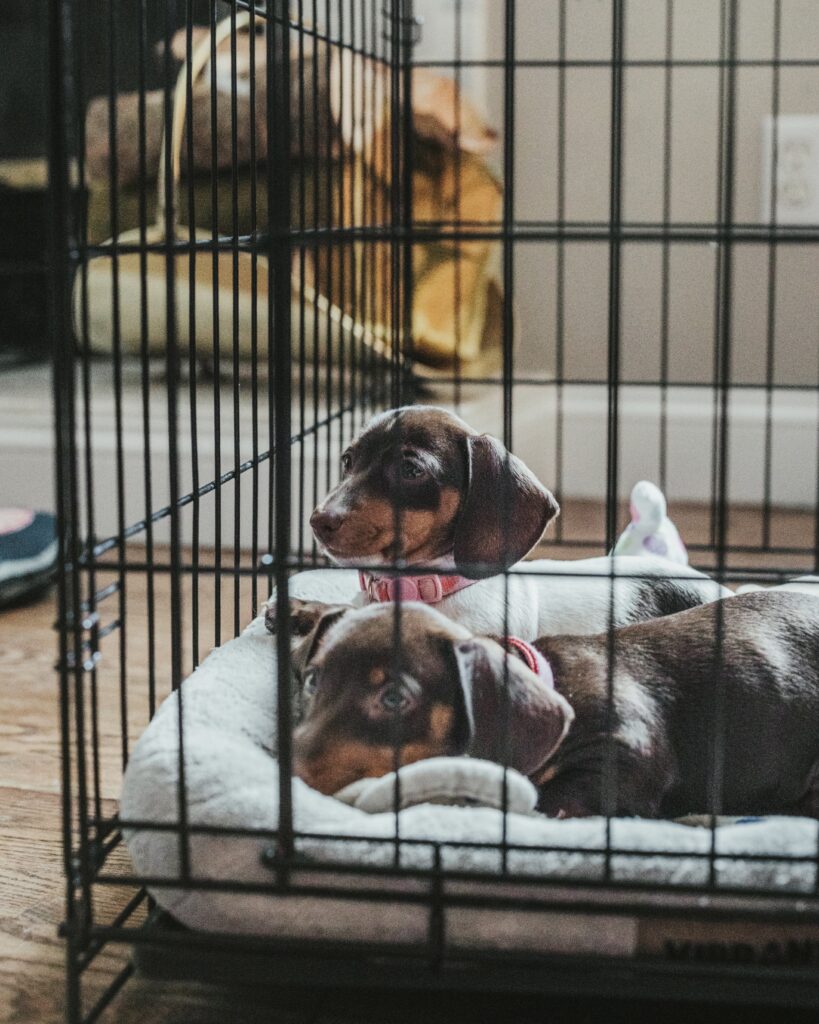
The crate should be just big enough for your puppy to stand up, turn around, and lie down comfortably. If it’s too large, your puppy may use one end as a bathroom and sleep at the other. Many crates come with dividers so you can adjust the size as your puppy grows.
Making the Crate a Happy Place
A crate should never be used as punishment. Instead:
- Toss treats and toys inside to encourage exploration
- Feed meals in or near the crate
- Add a soft blanket or bed
- Start with short stays and build up gradually
- Stay nearby at first, then slowly increase the distance
Crate Time Limits
Remember the bladder rule above. Puppies cannot be crated for long stretches during the day, and a puppy left too long will have no choice but to go in the crate, which undermines training. If you work long hours, arrange for a family member, friend, or dog walker to give your puppy midday breaks.
What to Do When Accidents Happen
Accidents are a normal part of puppy potty training. How you respond matters far more than the accident itself.
Do This
- Stay calm. If you catch your puppy in the act, calmly interrupt with a short sound like “oops,” scoop them up, and take them outside to finish.
- Reward them if they finish outside.
- Clean thoroughly with an enzymatic cleaner. These products break down the odor molecules that attract puppies back to the same spot. Avoid ammonia-based cleaners, since the smell can resemble urine.
Don't Do This
- Don’t punish or scold your puppy. Yelling, swatting, or “rubbing their nose in it” doesn’t teach what you want. It teaches your puppy to fear going potty in front of you, and they may start hiding to go, making training harder.
- Don’t punish after the fact. Puppies can’t connect a delayed reaction with something they did earlier.
- Don’t blame the puppy. An accident is usually a sign you missed a signal, waited too long, or gave too much freedom too soon.
Common Potty Training Mistakes to Avoid
Even well-meaning owners slip up. Watch out for these frequent mistakes:
- Giving too much freedom too early. Free roam of the house is a privilege earned over time, not a starting point.
- Not rewarding quickly enough. A treat given after you’ve walked back inside won’t connect to the behavior.
- Inconsistent routines. Changing the schedule daily confuses puppies and slows progress.
- Skipping the leash. Letting a puppy wander the yard unsupervised makes it harder to tell if they’ve actually gone.
- Expecting too much too soon. A ten-week-old puppy can’t “hold it” all day, no matter how smart they are.
- Ignoring accidents until later. Accidents left uncleaned or cleaned poorly lead to repeat offenses.
- Relying only on puppy pads. Pads can help in certain situations, but they can also teach puppies that going indoors is acceptable. If your goal is outdoor potty training, transition away from pads as soon as practical.
Final Thoughts
Potty training a puppy takes time, but it’s one of the most rewarding parts of building a bond with your new best friend. Stick to a routine, reward the behavior you want, supervise closely, and stay patient through the inevitable accidents. Before long, your puppy will be heading to the door on their own, and you’ll wonder why you ever worried.
Remember: every puppy learns at their own pace. With consistency and kindness, you’ll set your puppy up for a lifetime of good habits.