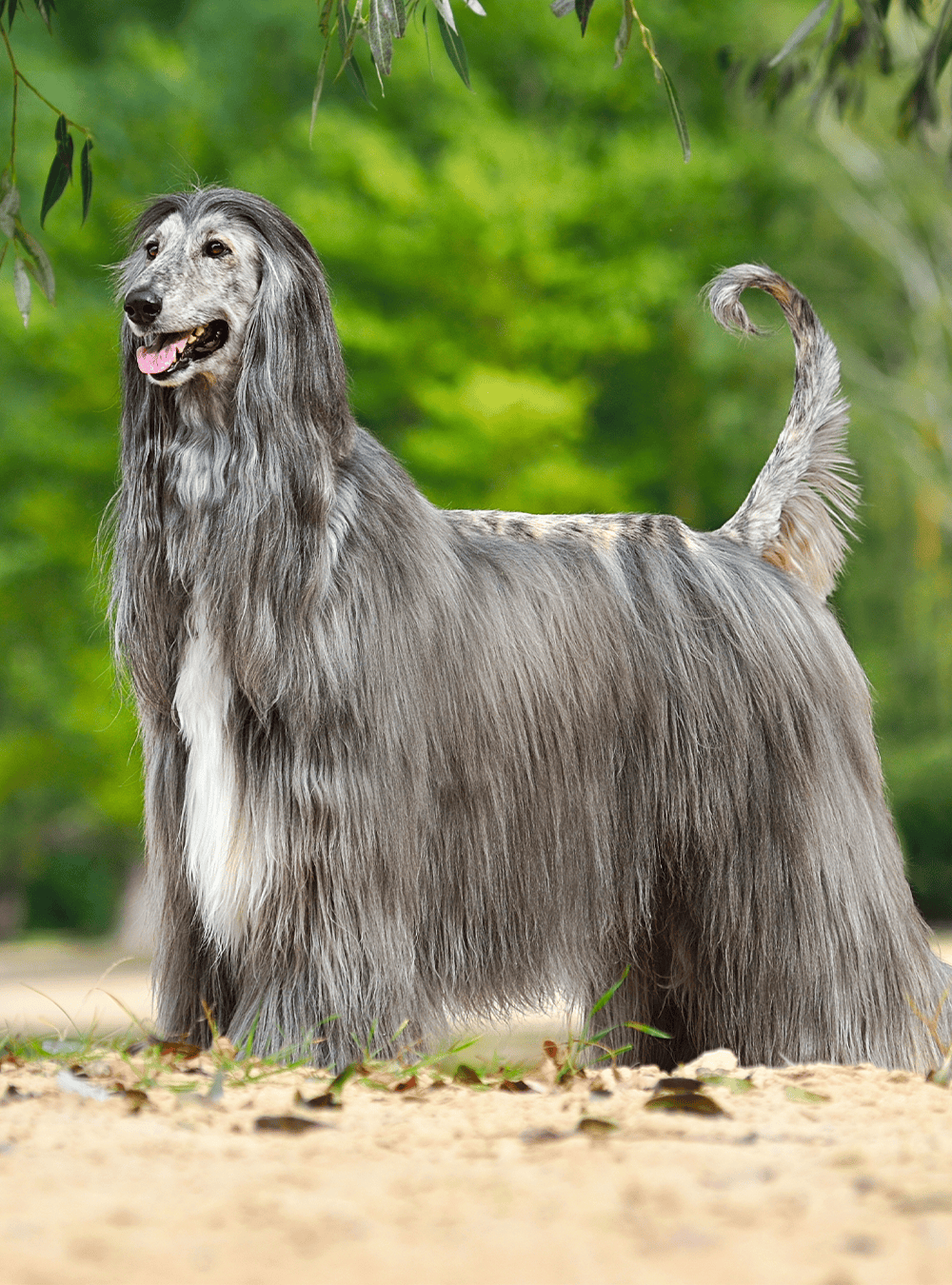
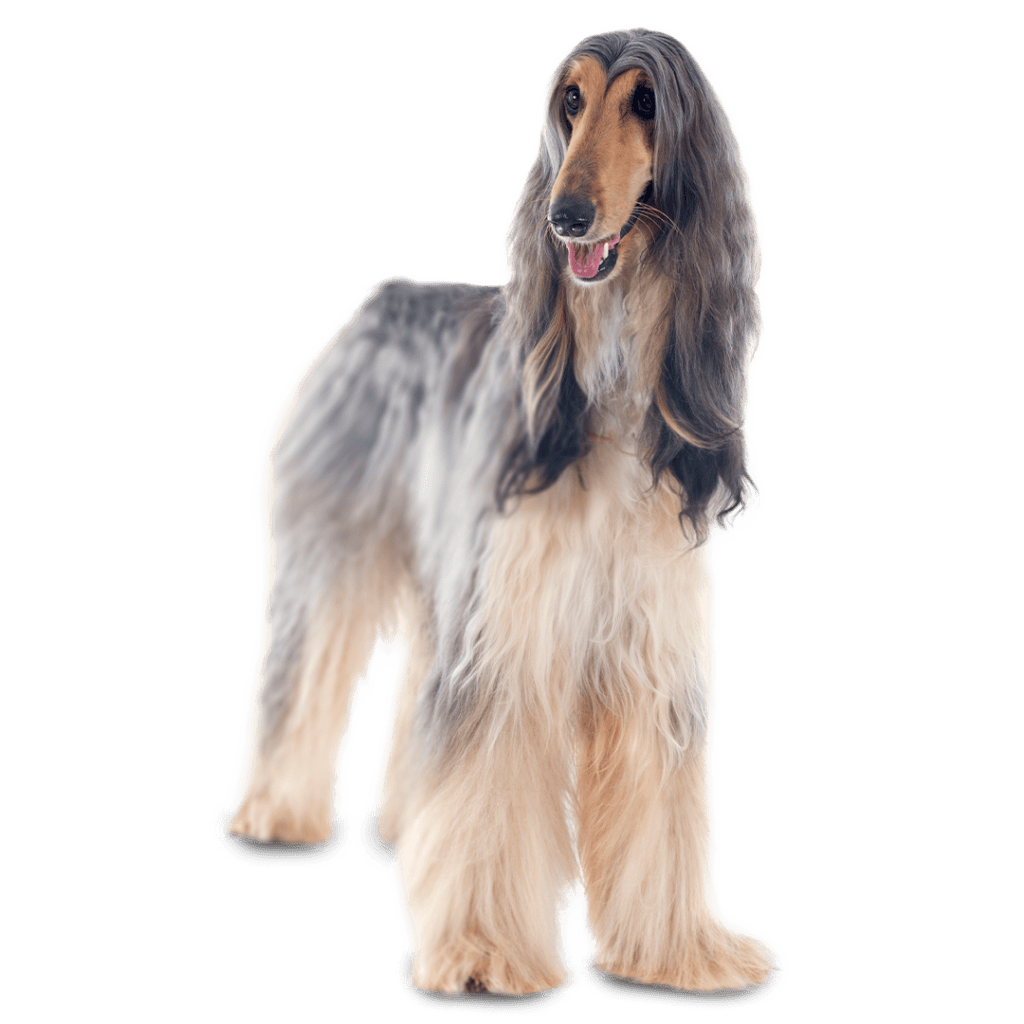
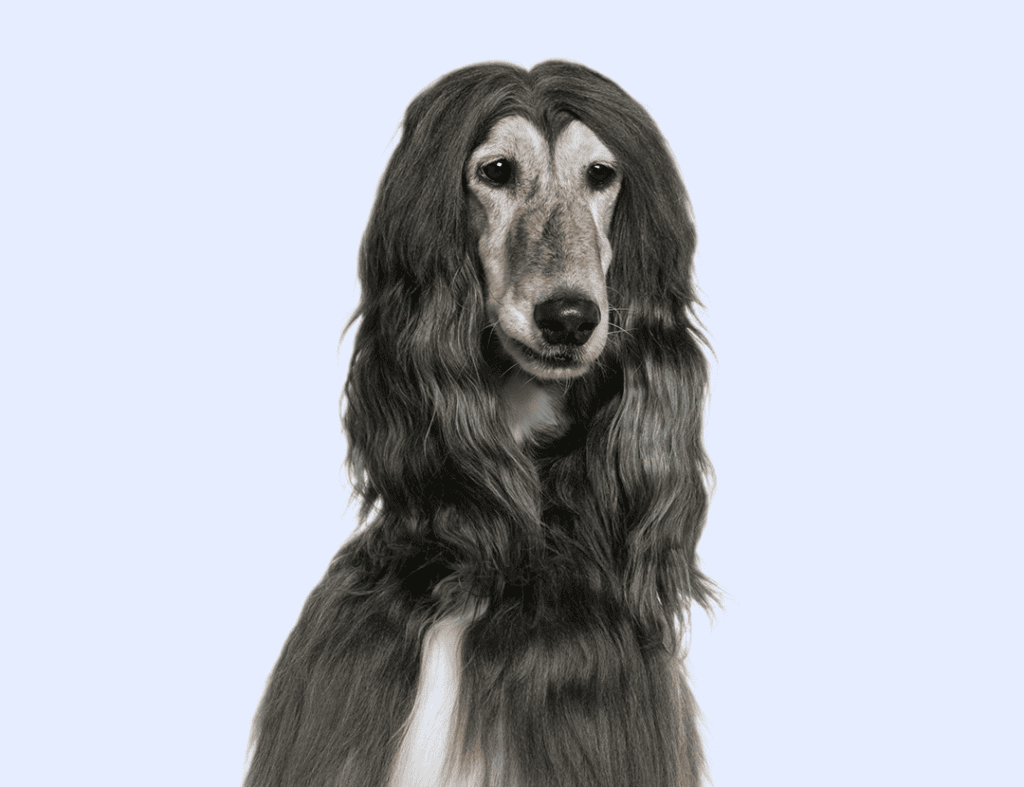
There’s a reason the Afghan Hound is nicknamed “the King of Dogs.” Everything about this breed — from its flowing, silky coat to its proud, upright carriage — radiates aristocratic elegance. And that elegance is no accident: the Afghan Hound is one of the most ancient sighthound breeds, developed over centuries in the rugged mountains of Afghanistan, where it hunted hare, wolves, jackals, and even snow leopards across brutal terrain, sometimes working alongside trained falcons. That harsh environment shaped a dog that’s as tough and athletic as it is beautiful — sure-footed, powerful, and built for sustained speed over rocky ground. The breed made a dramatic entrance into the West in the early 1900s, when British soldiers returning from military service brought Afghan Hounds home, and it created an instant sensation when it appeared at London’s Crystal Palace show in 1907. The AKC recognized the breed in 1926, and it has captivated dog lovers with its exotic, showstopping looks ever since. Beneath all that glamour, the Afghan Hound has a famously independent, dignified personality — often described as aloof with strangers but deeply affectionate and even playful with its own family. This is a thinking dog with a strong prey drive and an independent streak, so training calls for patience and creativity rather than repetition. Afghans need real daily exercise to stay content, plus a serious grooming commitment to keep that signature coat looking its best.