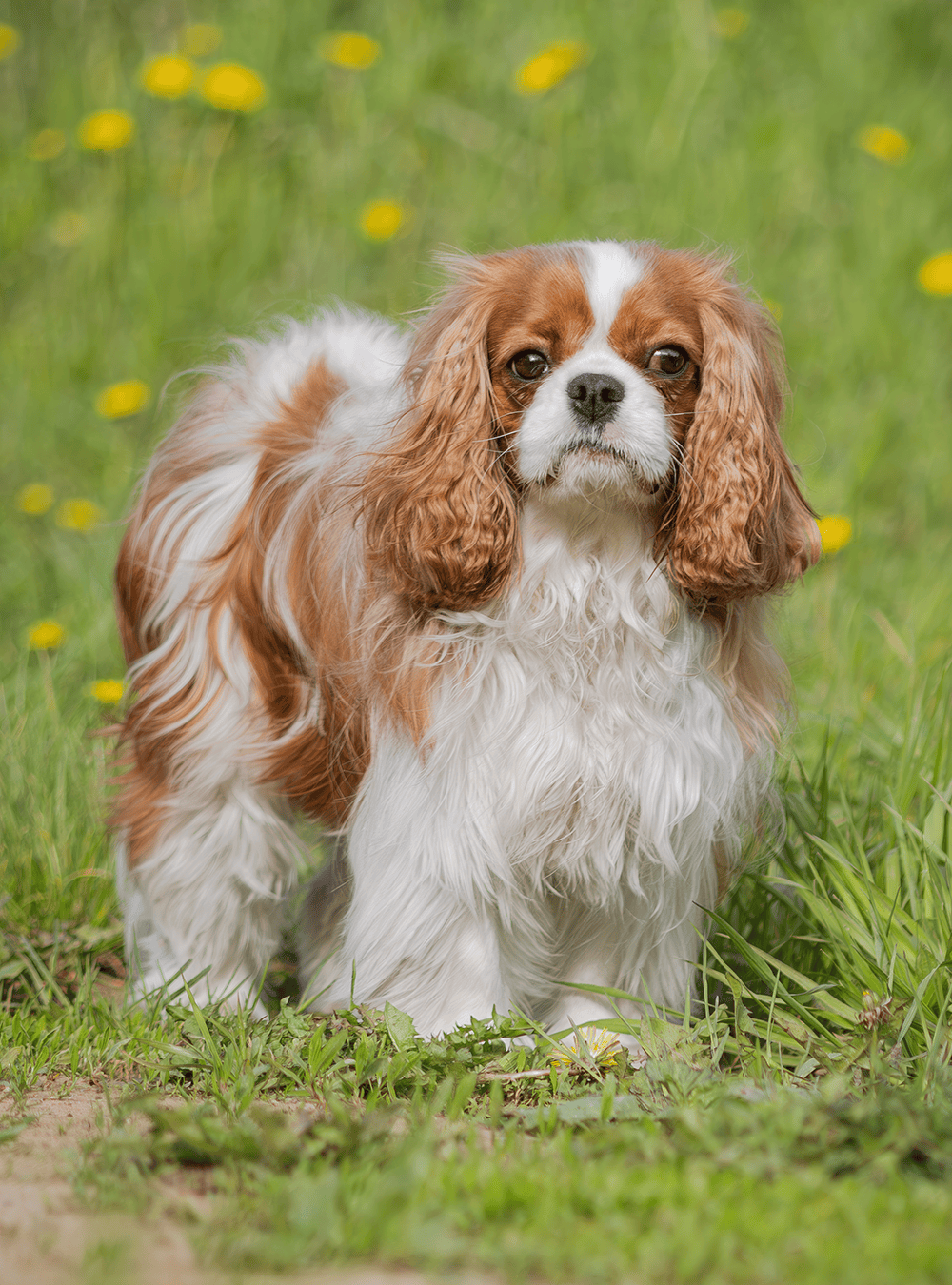
Few breeds carry quite as much royal pedigree, both literal and reputational, as the Cavalier King Charles Spaniel. Small toy spaniels have been treasured companions of English aristocracy since at least the 16th century, but it was King Charles II of England who became so devoted to the breed that it eventually took his name — the king was famously rarely seen without several of these little spaniels at his heels, even reportedly allowing them in the royal court and Parliament, where dogs were otherwise banned. Over the following centuries, breeding fashions shifted the toy spaniel’s face toward a flatter, more Pug-like look, and it took an American enthusiast named Roswell Eldridge, who offered a cash prize at a British dog show in the 1920s for spaniels resembling the longer-nosed dogs seen in old royal portraits, to spark a revival of the original type. Breeders who took up the challenge developed what we now know as the Cavalier, officially recognised as a distinct breed in the 1940s. True to its centuries-old purpose as a companion and lap warmer for drafty castles and carriage rides, the modern Cavalier retains an irresistibly sweet, gentle, and affectionate temperament. These are famously people-oriented dogs, happiest wherever their favourite human happens to be, and they tend to get along beautifully with children, other dogs, and even cats. Cavaliers are also fairly easygoing and adaptable, doing well in everything from apartments to larger family homes, though their devoted nature means they don’t love being left alone for long stretches. Gentle, affectionate owners with plenty of time for cuddles and companionship are exactly what this breed thrives on.