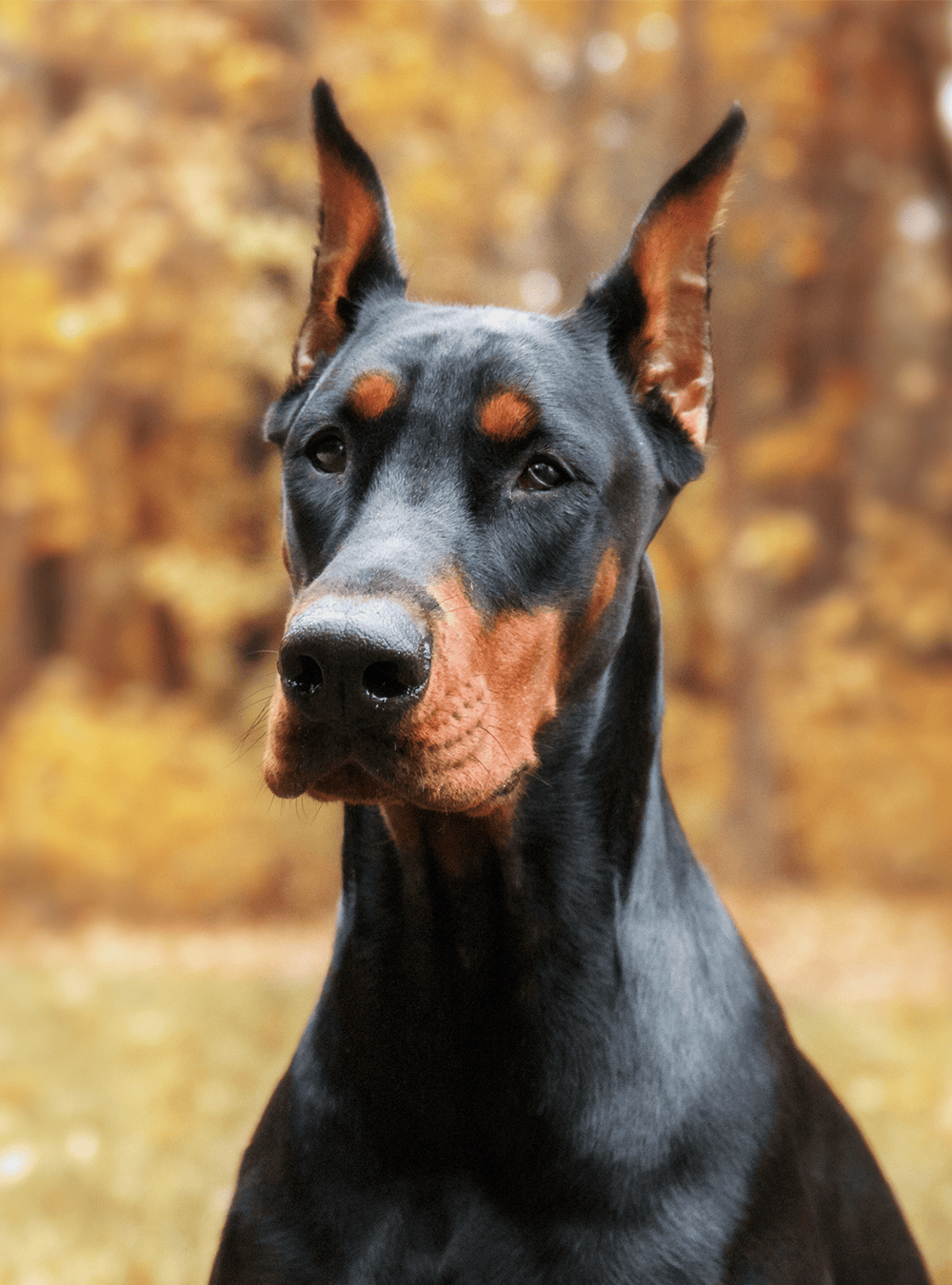
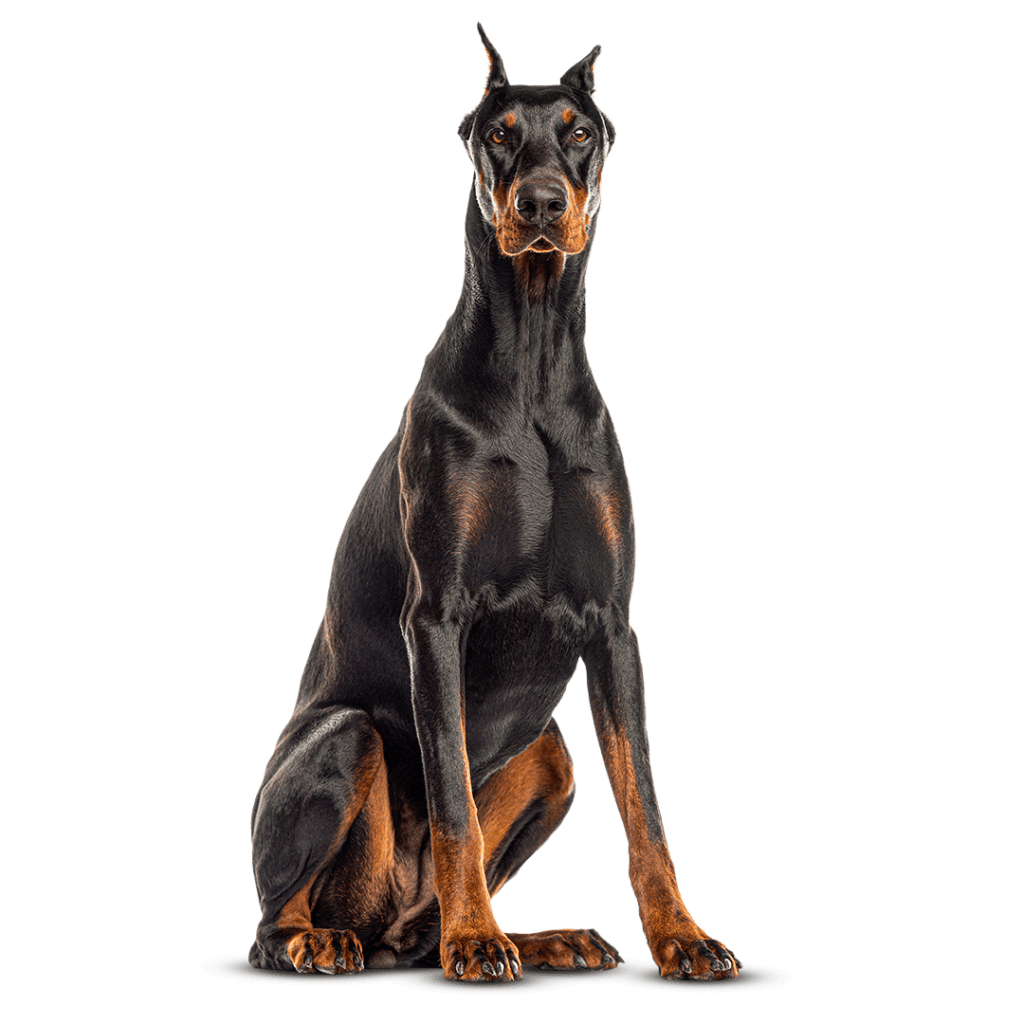
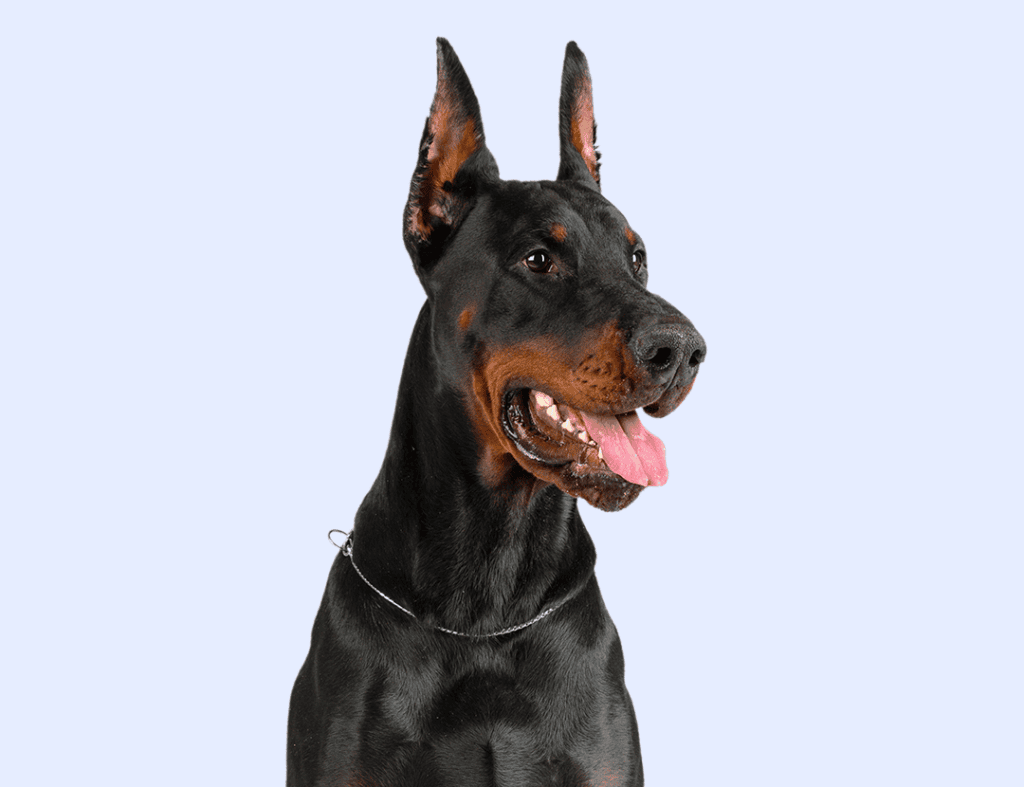
Few breeds turn heads quite like the Dobermann Pinscher. Sleek, muscular, and dressed in a glossy coat, this is a dog that looks every bit as capable as it is — and it is capable. The breed was developed in Germany around 1890 by Louis Dobermann, a tax collector who wanted a medium-sized dog tough enough to guard him on his rounds and loyal enough to be a true companion. To build it, breeders likely drew on the Rottweiler, German Pinscher, old shorthaired shepherd, Black and Tan Terrier, and Greyhound — a blend that explains the Dobermann’s rare combination of power, speed, and elegance. Early Dobermanns had a reputation for being fiercely “sharp,” but generations of dedicated breeding have shaped the modern Dobermann into a far more balanced dog: alert and fearless when needed, but affectionate, loyal, and surprisingly gentle with the people it loves. Dobermanns bond intensely with their families and prefer to be right beside their owner rather than watching from a distance, which is part of why they make such devoted companions as well as formidable protectors. They’re whip-smart, highly trainable, and thrive with an owner who gives them a job to do — whether that’s obedience work, agility, or simply structured daily exercise. Left without enough mental and physical stimulation, that same intelligence can turn into mischief, so this is a breed best suited to active households ready to invest time in training and companionship.